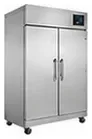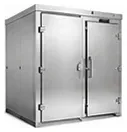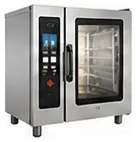
California’s food code gives cooked food two hours to drop from 135°F to 70°F, then four more to reach 41°F. A blast chiller is how commissaries, caterers and busy restaurants hit those numbers. One that has quietly slowed down can push a batch out of compliance while everything still looks normal. Best Pro repairs reach-in and roll-in blast chillers and shock freezers for commercial kitchens around the Bay.
Signs and causes
Every cycle runs a little longer. The condenser coil is the first place to look. A blast chiller dumps a lot of heat in a short time, and flour and grease from the kitchen choke the coil fast.
Long cycles even with a clean coil. These units depend on a strong blast of air over the food. One evaporator fan motor that has died can add a big chunk of time to every load.
Ice on the evaporator. Hot, steaming pans load the cabinet with moisture. If a defrost heater, termination sensor or drain has failed, that moisture turns to ice on the coil and blocks the airflow.
Cycles that end too soon, or never end. In probe mode the controller waits for the core of the food to reach the target. A damaged probe or cable reads wrong or throws an error.
Runs but can’t pull down a full load. A refrigerant leak or a compressor that’s losing capacity.
Commissaries and cook-chill kitchens
Kitchens that cook for several locations or for delivery may run four or five full cycles a day. For them a slow chiller means late trucks. We can schedule maintenance between production runs, so the chiller gets cleaned and checked without stopping the line.
What we check
Condensing unit and refrigerant pressures, evaporator fans, the defrost system, the controller, door gaskets and heaters — and we test the food probe in an ice bath. You get the price before any work starts, and the repair carries a 90-day warranty on parts and labor.
Loading for faster cycles
Use shallow pans, leave gaps between them for the air, keep lids off during the cycle and stay under the rated load. If cycles still run long after that, it’s time for a service call.
After chilling, food goes into storage: see walk-in cooler repair, walk-in freezer repair and commercial freezer repair.
What it costs
- Service call and diagnostic
- $120 — free if you go ahead with the repair
After the diagnostic you get a flat price for the whole repair, and you decide before any work starts. Parts and labor carry a 90-day warranty. All prices
Common problems we fix
- Chill cycle takes too long
- Not reaching target temperature
- Food probe error or wrong reading
- Ice buildup on the evaporator
- Evaporator fans not running
- Compressor overheating or tripping
- Door not sealing
- Error codes on the controller
Thank you!
We got your request and will call you back shortly during business hours (7:00 AM – 9:00 PM).
In a hurry? Call us: (650) 582-0258